Let’s be honest—Metro Manila traffic can test anyone’s patience. That’s why the LRT-2 feels like a little travel hack hiding in plain sight. It’s fast, air-conditioned, reliable, and best of all, it lets you skip hours of sitting in bumper-to-bumper traffic.
Whether you’re a daily commuter racing to work, a student heading to class, a tourist exploring the city, or simply hopping on the train for the first time, knowing the LRT-2 Stations List in Order can make your journey so much easier. A little planning goes a long way, and before you know it, you’ll be navigating the line like a pro.
In this guide, we’ll walk through the complete LRT-2 stations from Recto to Antipolo, along with what you’ll find at each station, nearby landmarks worth checking out, train operating hours, fare information, travel tips, and answers to the questions riders ask most often.
Overview of LRT Line 2
LRT Line 2 is operated by the Light Rail Transit Authority (LRTA). It spans 17.6 kilometers across Metro Manila and Rizal province. This elevated rail system serves as a critical artery for daily commuters. The line connects Antipolo in Rizal with Recto in Manila, passing through Marikina, Pasig, Quezon City, and San Juan City along the way.
Since welcoming its first passengers in 2003, the LRT-2 has continued to grow alongside the communities it serves. One of its biggest milestones came in July 2021 with the completion of the East Extension Project, which added Marikina-Pasig and Antipolo stations. That expansion was a pretty big deal—it marked the first time an LRT station officially extended beyond the metro.
Getting around is refreshingly simple. Most stations feature island platforms, trains run in both directions throughout the day, and transfers to other rail lines are surprisingly convenient.
Need to switch to the MRT-3? Just head to Araneta Center-Cubao and walk through Gateway Mall. Going to the LRT-1 instead? A covered walkway connects Recto to Doroteo Jose Station, making it easy to continue your journey without having to brave the traffic below.
Key Features of LRT-2
- 13 operational stations serving six cities
- 17.6-kilometer elevated track network
- Direct connections to MRT-3 and LRT-1 lines
- Air-conditioned trains with modern facilities
- Beep card payment system for convenience
Future Expansion Plans
- Three-station West Extension to Divisoria
- New Tutuban station for improved coverage
- Pier 4 terminal near Manila Port area
- Enhanced connectivity across business districts
- Reduced travel times for port-area workers
And the story doesn’t end there. The LRT-2 is expected to grow even more with the planned West Extension Project, which will add three new stations: Divisoria, Tutuban, and Pier 4. Once completed, the extension will make it even easier to reach some of Manila’s busiest shopping districts, transport hubs, and commercial centers—without spending forever in traffic.
As of 2026, the project is still in the right-of-way acquisition stage, and the Light Rail Transit Authority (LRTA) is continuing to finalize construction schedules. While there’s no confirmed completion date just yet, the expansion promises to make the LRT-2 an even more convenient way to get around the metro in the future.
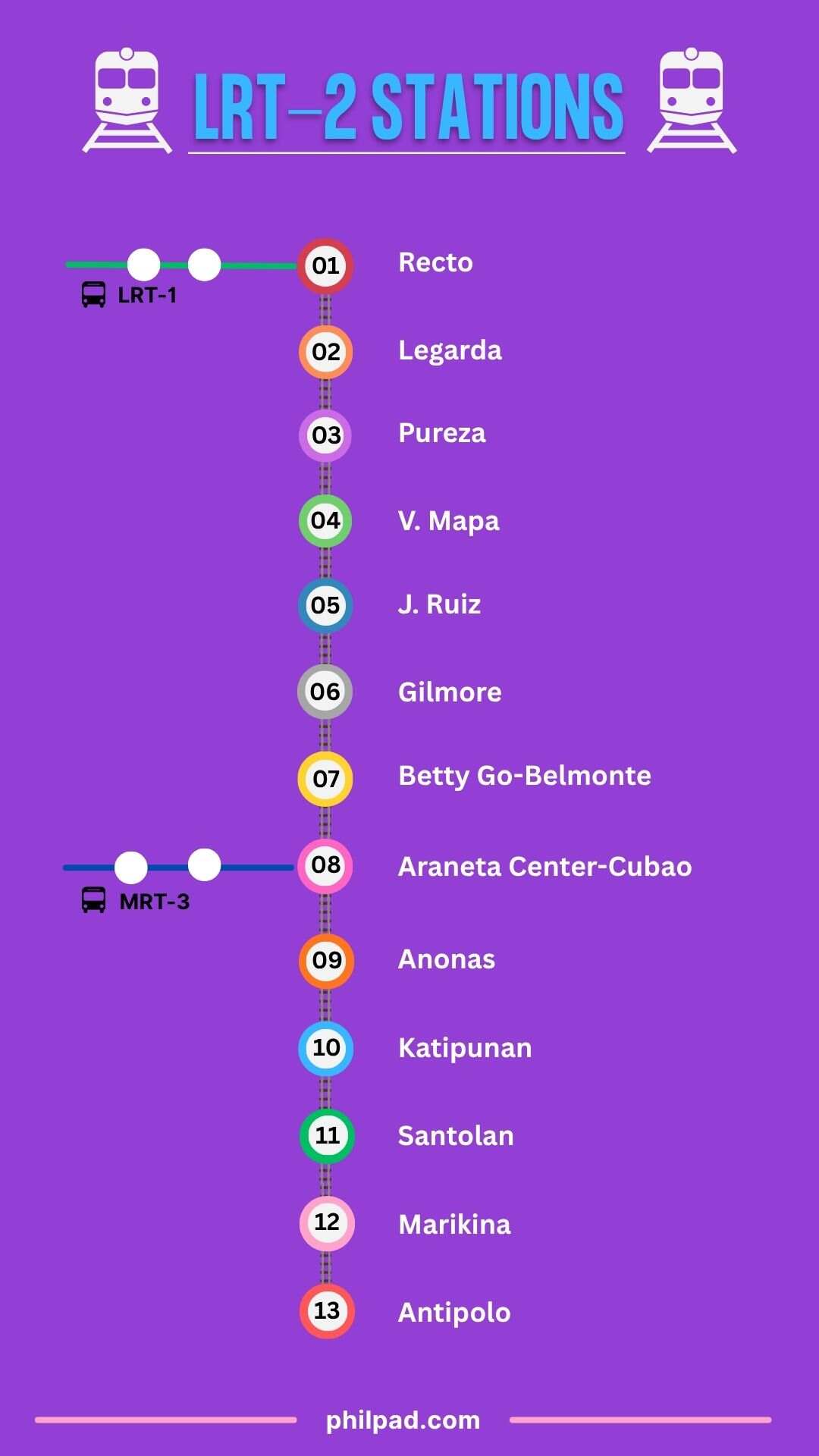
Complete LRT-2 Stations List in Order (Recto to Antipolo)
1. Recto Station
Recto Station is the western end of the LRT-2 line and one of its busiest stops. Set along Recto Avenue, it’s surrounded by popular shopping areas, schools, and local businesses, so there’s always something happening nearby.
What really makes this station stand out is its direct link to LRT-1. A covered walkway connects Recto to Doroteo Jose Station, making it easy to switch between the two rail lines and continue your trip across Manila without missing a beat.
Nearby Landmarks:
- Avenida
- Isetann Cinerama Complex
- Raon Shopping Center
- Cartimar
- Arranque Market
- Divisoria
- Tutuban Mall
- QQ Mall
2. Legarda Station
Legarda Station takes its name from Filipino legislator Benito Legarda and is located along Legarda Street in Sampaloc, Manila. The location places it at the heart of Manila’s famous university belt. Surrounded by some of the city’s well-known colleges and universities, it’s a lively stop where students make up a big part of the daily crowd, especially during the morning and afternoon rush.
Restaurants, dormitories, bookstores, and review centers surround the station, making it a busy stop throughout the academic year.
Nearby Landmarks:
- San Beda University
- Centro Escolar University
- San Sebastian College
- University of the East
- La Consolacion College
- College of the Holy Spirit
- Minor Basilica and Parish of Saint Sebastian (Shrine of Our Lady of Mount Carmel of Saint Sebastian)
- University of Santo Tomas
3. Pureza Station
Pureza Station on Pureza Street in Santa Mesa, Manila, is a familiar stop for thousands of students. Thanks to the many colleges and universities nearby. During the school year, it’s filled with commuters carrying backpacks, coffee, and probably a deadline or two. The station also once linked with the Philippine National Railway, although PNR services have been suspended since 2024 to make way for the North–South Commuter Railway (NSCR) project.
Nearby Landmarks:
- Polytechnic University of the Philippines
- San Miguel Brewery Pureza Office
- Eulogio ‘Amang’ Rodriguez Institute of Science and Technology (EARIST)
- Sacred Heart of Jesus Parish and Catholic School
4. V. Mapa Station
V. Mapa Station sits along Ramon Magsaysay Boulevard at the corner of V. Mapa Street in Santa Mesa, Manila. It serves passengers from nearby neighborhoods in Manila, San Juan, and Quezon City, making it a popular stop for both workers and students. Its central location also puts shops, schools, and local businesses within easy reach.
Nearby Landmarks:
- SM City Sta. Mesa
- SMDC Mezza Residences
- Central Colleges of the Philippines
- UERM Medical Center (University of the East Ramon Magsaysay Medical Center)
5. J. Ruiz Station
J. Ruiz Station on J. Ruiz Street is one of the quieter stations on the line. It honors Juan Ruiz, a Katipunero who fought in the siege of El Polvorin. The location itself carries historical significance, situated near the Pinaglabanan Shrine. This shrine preserves the memory of Filipino revolutionaries who fought for independence.
Nearby Landmarks:
- San Juan City Hall
- J. Ruiz Estate
- San Juan Medical Center
- Pinaglabanan Shrine (Museo El Deposito and Museo de Katipunan)
6. Gilmore Station
Gilmore Station is famous throughout Metro Manila for its electronics district. Visitors come here to purchase computers, laptops, smartphones, computer accessories, gaming equipment, and other electronic gadgets. Technology enthusiasts often consider Gilmore one of the best places to compare prices before purchasing gadgets.
Besides electronics, the surrounding area also features cafés, restaurants, and office buildings.
Nearby Landmarks:
- Robinsons Magnolia
- St. Paul University Quezon City
- Gilmore IT Center
While St. Luke’s Medical Center, Broadway Centrum, and Greenhills Shopping Center lie beyond walking distance, jeepneys, taxis, and ride-sharing services provide easy connections.
7. Betty Go-Belmonte Station
Named after the respected journalist and publisher Betty Go-Belmonte, this station serves parts of Quezon City. The station is generally less crowded compared to Cubao, making it a comfortable boarding point.
Nearby Landmarks:
- Trinity University Asia
- Upcoming SMDC condo project
- The Immaculate Conception Cathedral
- The Church of Jesus Christ of Latter-Day Saints
8. Araneta Center-Cubao Station
Araneta Center-Cubao Station is one of the busiest stops on the LRT-2. Whether you’re commuting to work, heading to a concert, catching a bus, or planning a shopping day, chances are you’ll pass through here.
One of its biggest perks is the seamless connection to the MRT-3. A short, covered walk through Gateway Mall and Farmers Plaza lets you transfer between the two rail lines without stepping into traffic. That’s a win on any day.
And if you’re not in a hurry? You’re in the right place. Gateway Mall, Farmers Plaza, and the Smart Araneta Coliseum are all just steps away, while the nearby Araneta City Busport offers point-to-point buses, including routes to and from NAIA.
The station is also close to Route 1 of the Quezon City Bus Service, making it even easier to get around. With convenient connections to both trains and buses, it’s one of Metro Manila’s most accessible public transportation systems.
Nearby Landmarks:
- Smart Araneta Coliseum (Big Dome)
- Gateway Mall
- Farmers Plaza
- Araneta City Busport
- Cubao Expo
9. Anonas Station
Located on Anonas Street in Quezon City, Anonas LRT-2 Station provides access to both educational and medical facilities. The elevated station connects to several jeepney and tricycle terminals for last-mile connectivity. Route 3 of the Quezon City Bus route also serves this area.
Looking ahead, Anonas is also planned to connect with the Metro Manila Subway. This will create another major transfer point in the city’s expanding transit network.
Nearby Landmarks:
- World Citi Colleges
- World Citi Medical Center
- Anonas City Center (Family Mart)
- Saint Joseph Parish
- Saint Joseph Catholic School
- Hi-Top Supermart
10. Katipunan Station
Katipunan Station stands out for one unique reason—it’s the only underground station on the LRT-2. Nestled along Katipunan Avenue in Loyola Heights, Quezon City, it’s a favorite stop for students heading to the University of the Philippines Diliman, Ateneo de Manila University, and Miriam College.
The station blends into the university district while providing fast, modern transportation for thousands of daily commuters. Need to go farther? You can also connect to the free Quezon City Bus Service (Routes 3 and 7), making it easy to reach more destinations around the city.
Nearby Landmarks:
- Ateneo de Manila University
- Miriam College
- University of the Philippines Diliman
- Katipunan Avenue restaurants
- Student residences
11. Santolan Station
Santolan Station is an important stop serving commuters from Marikina and nearby Pasig. Located along Marcos Highway near the city boundary, it also provides convenient access to the BFCT East Metro Manila Transport Terminal, where passengers can connect to provincial buses and other regional transportation. The station is also close to the LRT-2 Santolan Depot and Operations Control Center, which manage train maintenance and daily operations.
Nearby Landmarks:
- SM City Marikina
- Marikina River
- San Antonio de Padua Parish Church
- BFCT East Metro Manila Transport Terminal
12. Marikina-Pasig Station
Marikina-Pasig Station is a convenient stop for commuters traveling to and from Marikina and nearby areas of Pasig. Located along Marcos Highway, it provides quick access to the LRT-2 while helping passengers avoid heavy traffic. Jeepneys, buses, and UV Express vehicles are readily available outside the station for easy onward travel.
Nearby Landmarks:
- Marikina City proper
- Robinsons Metro East
- Sta. Lucia Mall
- Sta. Lucia Residences
13. Antipolo Station
Antipolo Station serves as the eastern terminus of the LRT-2 line. This station made history in July 2021 as the first operational LRT station outside Metro Manila. Located along Marikina-Infanta Highway near the Sumulong Highway intersection, it provides easy access to eastern Rizal communities.
The station connects directly to SM City Masinag through a covered walkway. This makes shopping and dining convenient for commuters. The East Gate Business Center and Terminal Center sit just a short walk away. The station also features extensive parking facilities, making it ideal for park-and-ride commuters from surrounding areas.
Nearby Landmarks:
- Metro Antipolo Hospital and Medical Center
- Cornel Medical Center
- SM City Masinag
- Diocesan Shrine and Parish of St. Therese of the Child Jesus
- Residential villages
People living in nearby subdivisions enjoy easy access to this station. Executive villages like Golden Meadows, Kingsville, Filinvest East Homes, and Vermont Park now have a faster and more convenient way to travel to Metro Manila, making daily commutes much easier.
LRT-2 Ongoing Extension from Recto Station
The LRT-2 isn’t stopping at Recto forever. The planned West Extension Project will continue the line toward Manila Bay, adding three new LRT-2 stations at Tutuban, Divisoria, and Pier 4. Once completed, the ₱10 billion expansion will make getting to Manila’s busy commercial district and nearby ferry terminals much faster—and with a lot less time spent in traffic.
LRT-2 Trains Operating Hours and Schedule
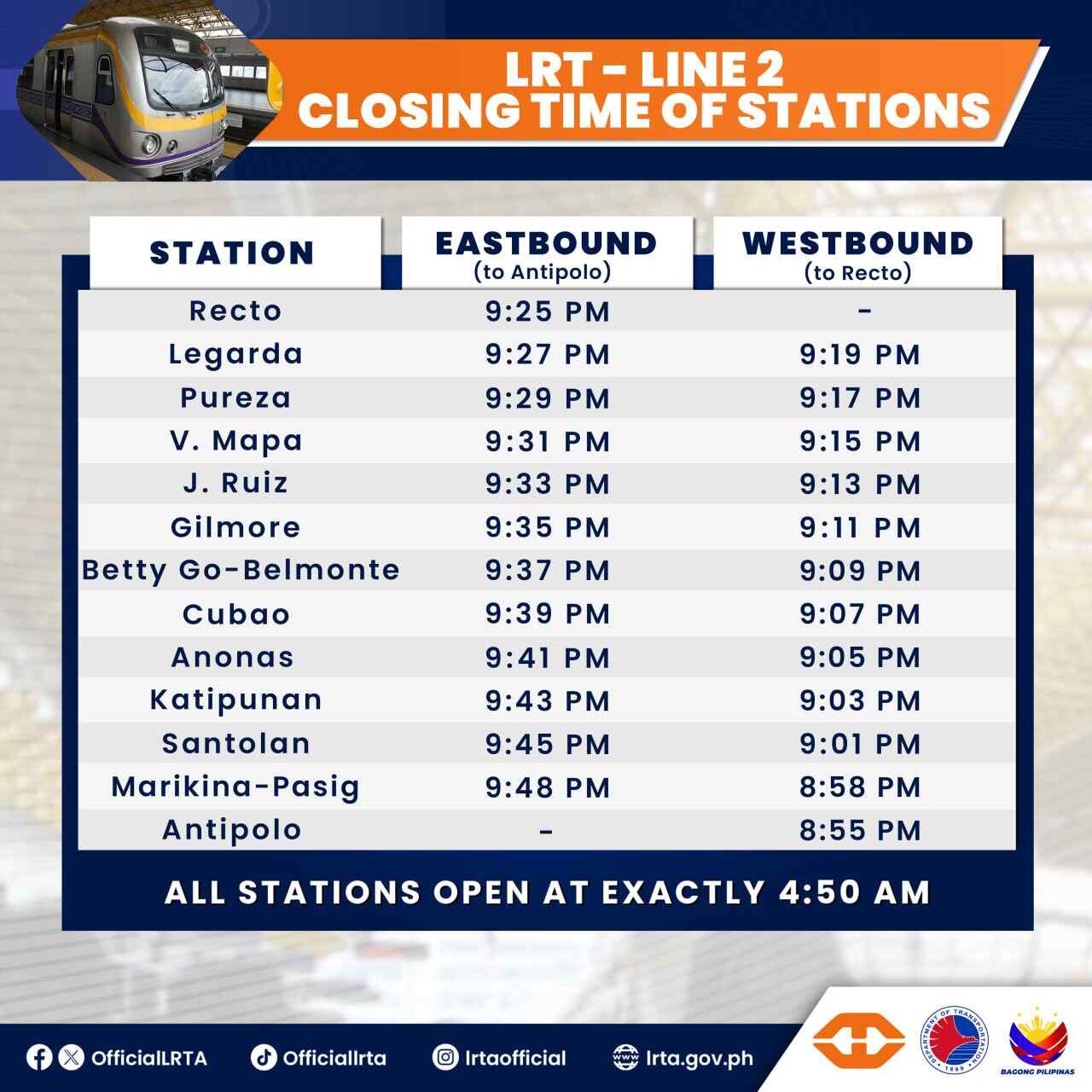
Effective 2026, the first trains leave Antipolo and Recto stations at 5:00 AM every day. The last train departs Antipolo at 9:00 PM, while the final trip from Recto leaves at 9:30 PM. Closing times are displayed above.
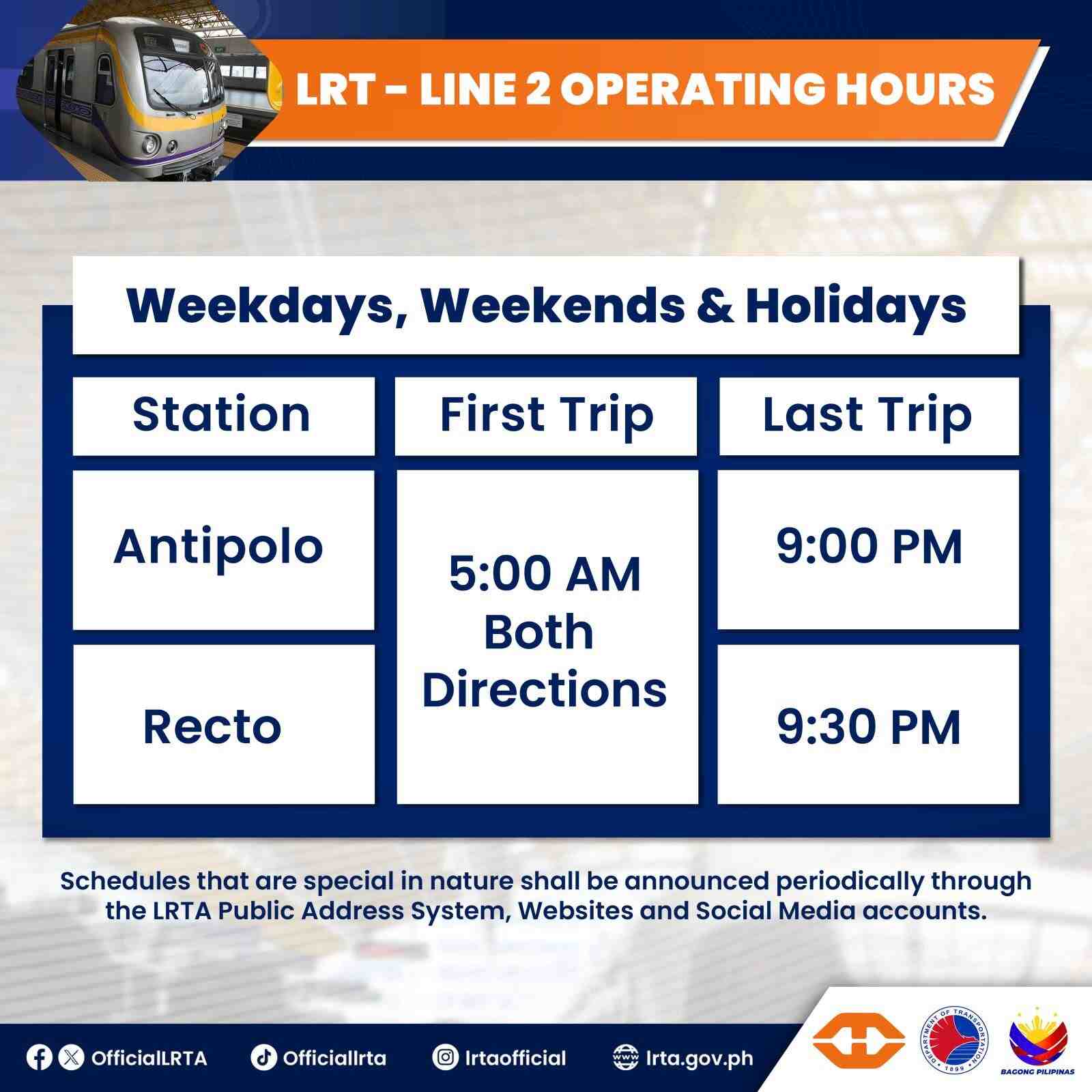
During weekday rush hours, trains arrive every few minutes to accommodate the morning and evening crowds. Service remains frequent throughout the day, although wait times may be slightly longer during off-peak hours. Weekend schedules generally follow the same operating hours.
Before you head to the station, it’s worth checking for any service advisories. Maintenance work, holidays, or special events can sometimes affect train schedules, so a quick update can save you from unexpected delays.
LRT-2 Fares, Payment Options, and Discounts
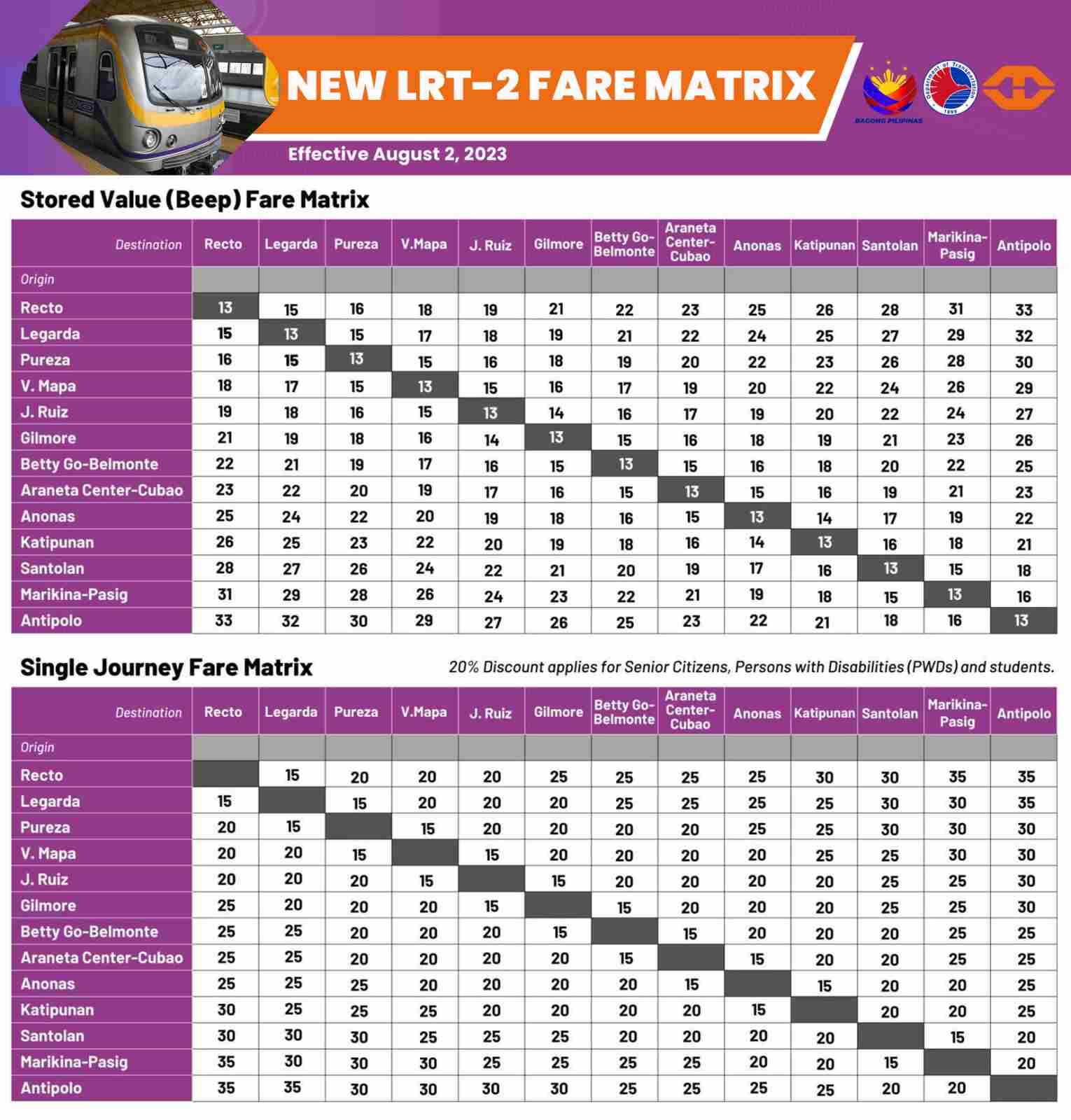
The LRT-2 fare structure uses a distance-based system, meaning your fare depends on how far you travel. The last major fees adjustment occurred in August 2023, and these rates remain current as of early 2026. Understanding fare options helps you budget your transportation costs and choose the most economical payment method.
Current Fare Rates
Beep card users enjoy lower fees compared to single journey tickets. The minimum boarding fee stands at ₱13 for beep card holders. The maximum fare for end-to-end trips from Antipolo to Recto reaches ₱33 when using a beep card. These rates apply to regular adult passengers without special discounts.
Single journey tickets cost slightly more than beep card fees. The minimum fare for one-way tickets is ₱15. The maximum fare for the complete route is ₱35. While the difference seems small, frequent commuters save significantly by using beep cards instead of buying one-way tickets daily.
Fare Discounts for Students, Seniors and PWDs
Special discounts make rail transit more accessible to specific groups. Effective from last year, the discount increased from 20% to 50% for qualified individuals. Students, seniors, and persons with disabilities (PWDs) can now save half the regular fare when using concessionary beep cards or presenting valid identification.
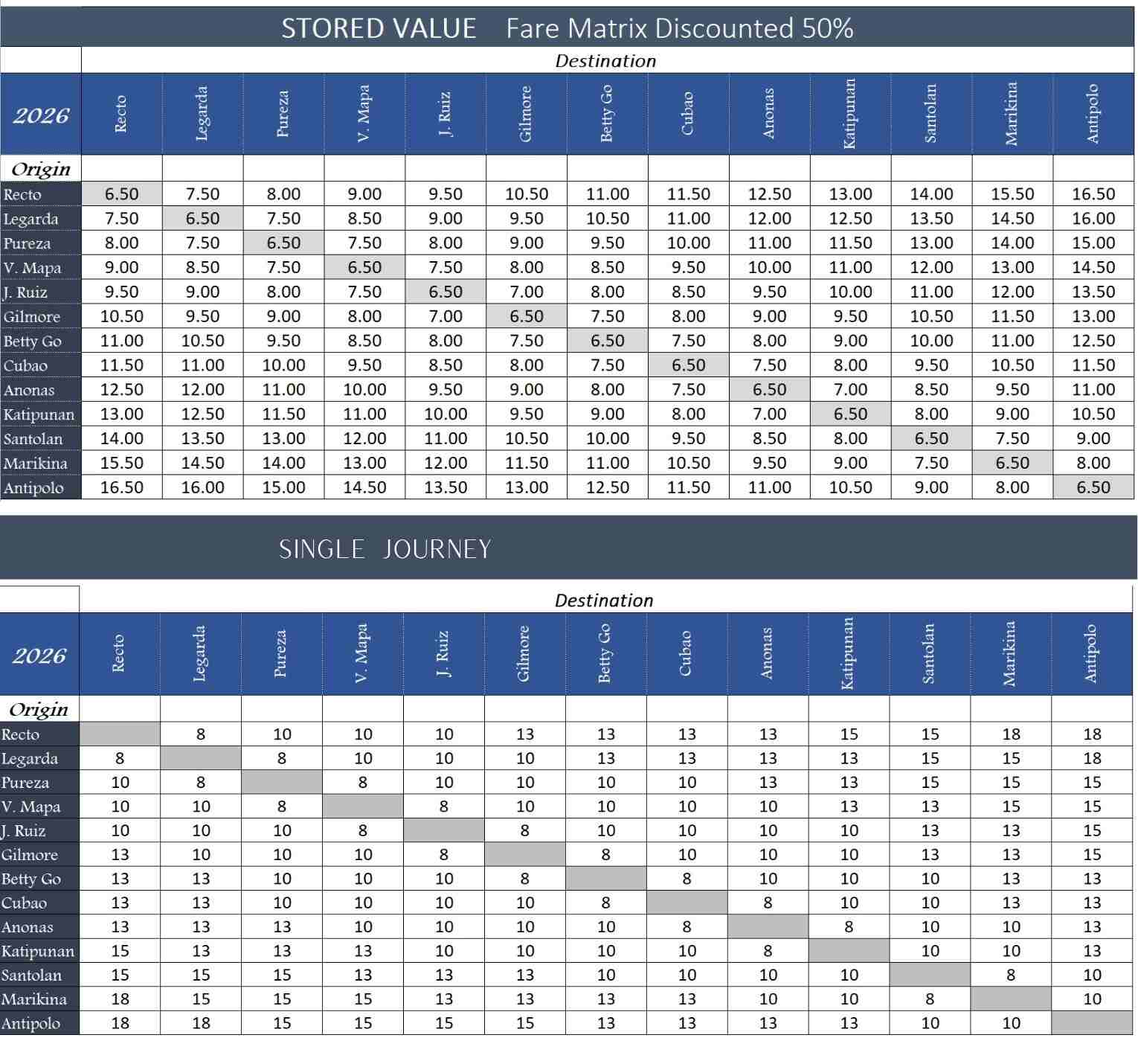
To qualify for student discounts, you need a valid school ID or a concessionary beep card specifically issued for students. Seniors must present their senior citizen ID or use a senior citizen beep card. PWDs should carry their PWD ID or obtain a PWD beep card. These discounted cards require initial application and verification of eligibility.
Getting Your Discount Beep Card
- Visit designated beep card outlets or LRT stations
- Bring valid ID proving student/senior/PWD status
- Complete application form with required documents
- Pay minimal card fee (usually around P100)
- Activate card and load with transportation credit
Benefits of Using Beep Cards
- Lower fares compared to single journey tickets
- Faster entry through station gates
- Use across multiple transport systems
- Reloadable at convenience stores nationwide
- Track spending and balance easily
LRT-2 Link and Connection to LRT-1 and MRT-3
Although LRT Line 2 operates independently, it connects with other major rail lines, making travel across Metro Manila more convenient.
Recto Station
Passengers can transfer to LRT Line 1 by walking to Doroteo Jose Station via the covered pedestrian connection.
Popular destinations accessible through this transfer include:
- Monumento
- Baclaran
- Pasay
- Manila City Hall
- United Nations Avenue
Araneta Center-Cubao Station
Passengers can transfer to MRT Line 3 through connected walkways.
This provides access to:
- Ortigas
- Shaw Boulevard
- Boni
- Guadalupe
- Buendia
- Ayala
- Taft Avenue
These transfer points make LRT Line 2 an essential part of Metro Manila’s integrated rail network.
Essential Travel Tips for LRT-2 Commuters
If you are riding LRT Line 2 for the first time, the following tips can help make your journey smoother:
1. Purchase a Beep Card
A reloadable Beep Card saves time and allows faster access through station gates.
2. Avoid Peak Hours
Rush hours are typically:
- 7:00 AM–9:00 AM
- 5:00 PM–7:00 PM
Traveling outside these periods usually means shorter queues and more comfortable rides.
3. Follow Station Rules
Observe proper etiquette by:
- Standing behind the yellow safety line
- Allowing passengers to exit before boarding
- Keeping noise to a minimum
- Avoiding prohibited items
4. Secure Your Belongings
Keep bags zipped and valuables close, especially during busy periods.
5. Check Service Advisories
Maintenance work, weather conditions, or special events may affect train schedules. Reviewing official announcements before leaving home can help you avoid delays.
Related Transportation Guides:
NSCR North-South Commuter Railway
Subscribe for FREE!