Lupang Hinirang was originally composed in 1898 as a ceremonial march for Philippine independence. It carries the hopes, dreams, courage, and determination of an entire nation.
What started as an instrumental piece eventually became the powerful vocal anthem we proudly sing today. Through every note and every word, Lupang Hinirang reminds us of where we came from and the long, difficult journey our people took toward freedom.
So, let’s take a little trip through history and uncover the fascinating story behind our national anthem—from its beginnings to the meaning behind its lyrics. Because when we understand the story behind the song, we don’t just sing it… we understand why it matters.
What is Lupang Hinirang?
Lupang Hinirang is the national anthem of the Philippines—and its name already carries a pretty powerful meaning. It can be understood as “Chosen Land” or “Beloved/Chosen Land,” depending on how you interpret the phrase.
But this isn’t just a song we sing at ceremonies. Its words are filled with love for the country, courage, freedom, national pride, and that deep willingness to make sacrifices for the Philippines.
And yes, there’s an actual law behind it. Republic Act No. 8491, also known as the Flag and Heraldic Code of the Philippines, officially recognizes Lupang Hinirang as the national anthem and sets out its official lyrics and rules for how it should be performed.
Most importantly, the anthem is deeply connected to the Philippines’ long struggle for independence. So every time we hear those familiar notes, we’re not just hearing a song—we’re hearing a little piece of our history, our identity, and the story of a nation that fought for its freedom.

Lupang Hinirang Lyrics
The official lyrics specified in Republic Act No. 8491 are:
Bayang magiliw,
Perlas ng Silanganan,
Alab ng puso,
Sa dibdib mo’y buhay.
Lupang hinirang,
Duyan ka ng magiting,
Sa manlulupig,
Di ka pasisiil.
Sa dagat at bundok,
Sa simoy at sa langit mong bughaw,
May dilag ang tula,
At awit sa paglayang minamahal.
Ang kislap ng watawat mo’y
Tagumpay na nagniningning,
Ang bituin at araw niya,
Kailan pa ma’y di magdidilim.
Lupa ng araw, ng luwalhati’t pagsinta,
Buhay ay langit sa piling mo,
Aming ligaya na pag may mang-aapi,
Ang mamatay ng dahil sa iyo.
These are the lyrics set out in the national Flag and Heraldic Code.
Meaning of Lupang Hinirang, the National Anthem of the Philippines
At its heart, Lupang Hinirang is a love letter to the Philippines—but with a whole lot of courage and history woven into it.
The song celebrates the country as beautiful and precious while reminding us of something equally important: the Filipino spirit is brave, determined, and willing to stand up for freedom.
And what makes it especially beautiful is that the lyrics don’t just say, “Hey, the Philippines is amazing.” They paint a picture of it—the sea, the mountains, the blue sky, the sun, the stars, and the flag—and connect all of that beauty to something bigger: our identity as Filipinos and our love of freedom.
Love of Country
Right from the beginning, the Philippines is described as a beloved nation and the “Perlas ng Silanganan,” or “Pearl of the Orient.”
It’s a pretty powerful image because a pearl is something precious, something worth protecting. And when the anthem speaks of the flame of love living within the nation’s breast, it suggests that love for the Philippines isn’t just an idea we talk about—it’s something we carry within us.
So, the anthem starts with love and pride before taking us into something much stronger: courage and the determination to defend the country.
Courage and Freedom
One of the most memorable lines is:
“Duyan ka ng magiting”
In English, this means “cradle of the brave.”
And honestly, what a way to describe a nation.
The lines that follow make it clear that the Philippines isn’t meant to simply surrender to an oppressor. There’s a sense of strength, resistance, and dignity running through the words.
And that makes perfect sense when you remember the period in which the anthem emerged. The Philippines was going through a revolutionary struggle, and the desire for independence was very real. The anthem captures that spirit—the determination to protect the freedom that Filipinos had fought so hard to achieve.
Nature and National Beauty
Then we get this beautiful collection of images: the sea, mountains, breeze, and blue sky.
It almost feels like the anthem is giving us a little postcard of the Philippines, but with a much deeper meaning.
These aren’t just pretty landscapes. They represent home. They represent the places we remember, the places we belong to, and the things that make the Philippines uniquely ours.
The references to poetry and song also give the anthem a wonderfully artistic touch. The country’s beauty becomes something that inspires creativity, emotion, and a deep appreciation for freedom.
The Flag, Sun, and Stars
And then, of course, there’s the Philippine flag.
The anthem describes its shining presence as a symbol of victory and connects it with the sun and stars, those instantly recognizable elements of our national flag.
Together, these images represent hope, triumph, and the enduring identity of the Filipino people.
And when the anthem speaks of the sun and stars never growing dark, the message goes beyond the physical symbols. It’s almost a reminder that the ideals they represent—especially freedom and national pride—should never fade away.
Sacrifice for the Nation
And then we reach the part that really hits differently.
The closing lines express the idea that life with the Philippines is a source of happiness—and that when the country is threatened or oppressed, giving one’s life for the nation can itself be considered an honor.
That’s a pretty powerful definition of patriotism.
It’s not simply about waving a flag or singing an anthem with pride. It’s about courage, loyalty, responsibility, and the willingness to make sacrifices for something bigger than yourself.
And maybe that’s why Lupang Hinirang still carries so much emotional weight today. Every time we sing it, we’re not just celebrating the Philippines—we’re remembering the courage, love, and sacrifices that helped shape the nation we call home.
Who Wrote Lupang Hinirang?
Okay, here’s where the story gets interesting: Lupang Hinirang actually has two names you need to remember.
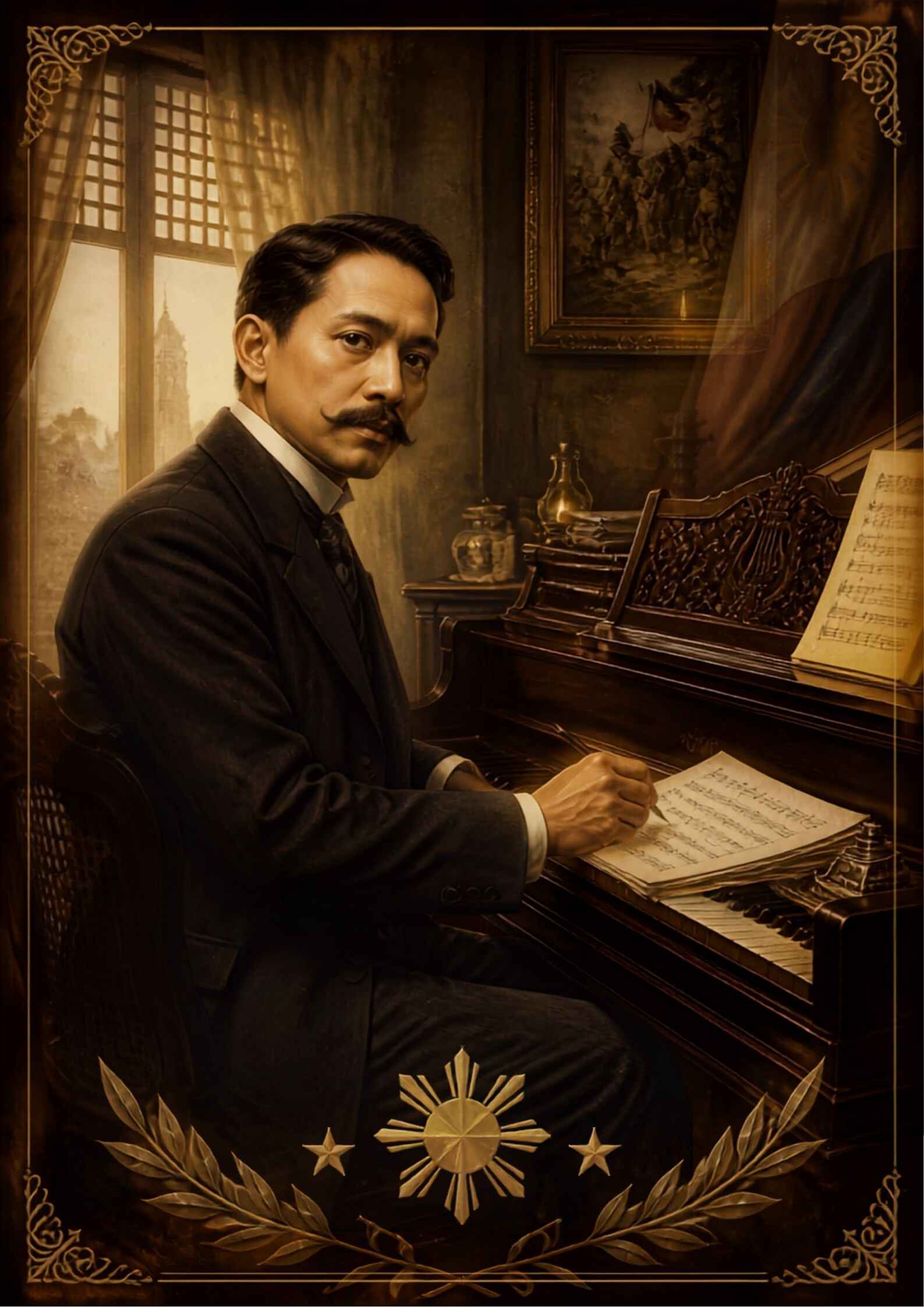
The music was composed by Julian Felipe, while the Filipino lyrics were written by Jose Palma. So, technically, one created the melody and the other gave it the words that would eventually become the anthem we know today.
The distinction is important because the music and lyrics didn’t appear at exactly the same time. Understanding that little detail makes the history of the song a lot easier to follow—and honestly, a lot more fascinating.
The History of Lupang Hinirang
The story of the anthem begins during one of the most important chapters in Philippine history: the revolutionary period.
Julian Felipe composed the music during the struggle for Philippine independence. Later, Jose Palma wrote the Filipino lyrics that became associated with the melody.
And from there, something much bigger happened.
What began as music connected to the revolutionary movement eventually grew into something that represented an entire nation. Lupang Hinirang became more than just a patriotic song—it became a powerful symbol of Philippine identity, independence, and national pride.
Of course, the anthem’s journey didn’t end there. Over the years, the government introduced rules governing when and how the anthem should be performed, including proper conduct during its rendition and the requirement that it be sung in Filipino.
Today, Lupang Hinirang is officially recognized and protected under the Philippines’ laws on national symbols.
So when we hear those familiar opening notes, we’re hearing more than a beautiful melody. We’re hearing music born during a revolution, lyrics that gave it a voice, and a national symbol that has carried the story of the Philippines across generations.
Important Facts About Lupang Hinirang
1. It is the official Philippine national anthem
Republic Act No. 8491 explicitly states that the national anthem is entitled Lupang Hinirang.
2. Julian Felipe composed the music
Julian Felipe is recognized as the composer of the anthem’s musical composition.
3. Jose Palma wrote the Filipino lyrics
Jose Palma is credited as the lyricist of the Filipino version used as the national anthem.
4. The anthem must be sung in the national language
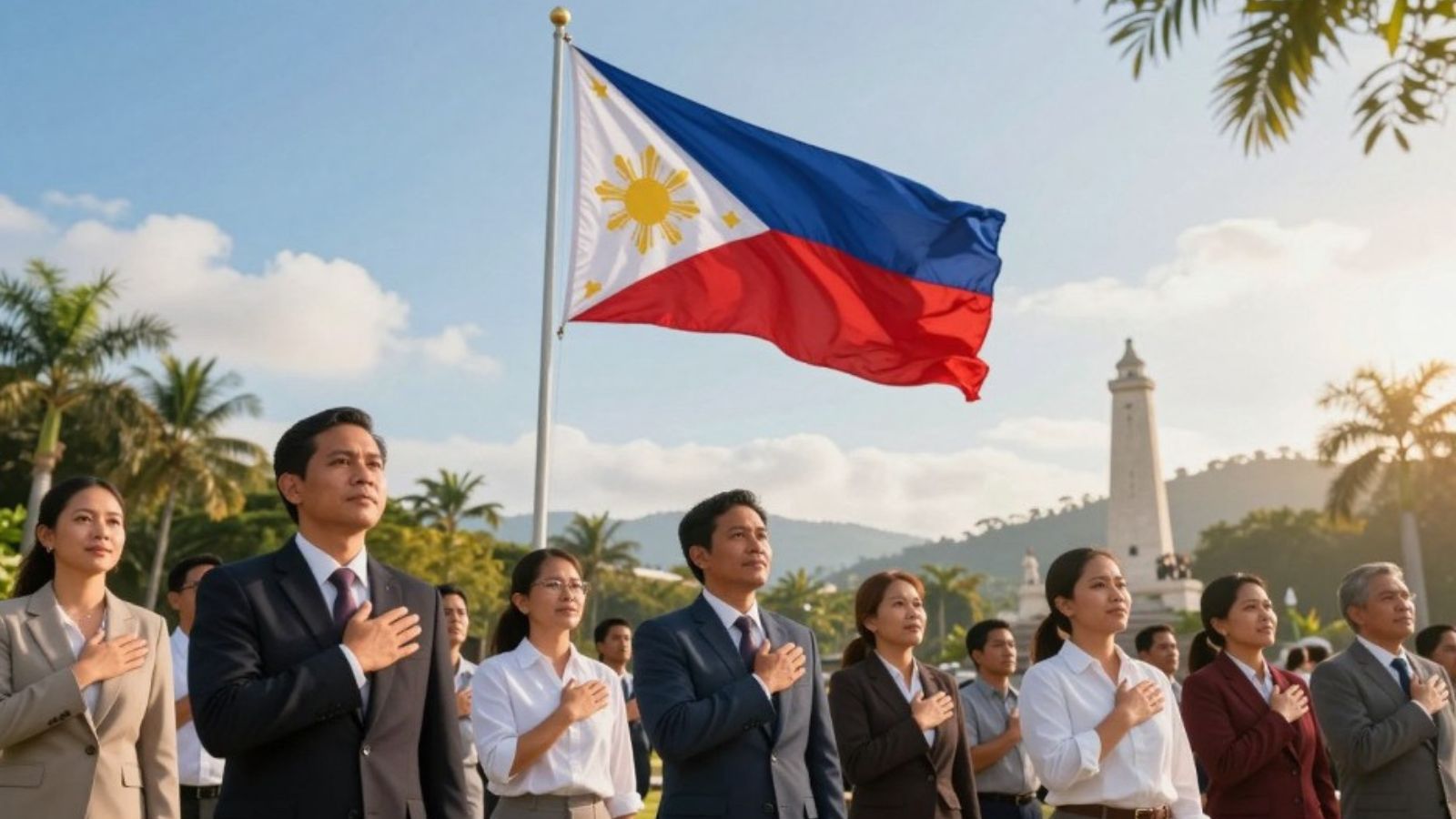
The Flag and Heraldic Code states that the national anthem shall be sung in the national language, whether inside or outside the Philippines.
5. The anthem is connected to the Philippine flag
Its lyrics refer directly to the country’s flag, including its sun and stars. This reinforces the connection between the national anthem and other Philippine national symbols.
6. It is used during flag ceremonies
Philippine government offices and educational institutions conduct flag ceremonies that include the playing or singing of Lupang Hinirang under the relevant rules. A 2026 presidential memorandum also directed national government agencies and educational institutions to integrate the official music-video rendition of the anthem into weekly flag ceremonies and certain official events.
7. Proper rendition matters
Republic Act No. 8491 specifies that the anthem’s rendition should follow the musical arrangement and composition of Julian Felipe and the prescribed original Filipino lyrics and march tempo.
How Should Lupang Hinirang Be Sung?
Here’s the thing: Lupang Hinirang isn’t just another song you sing at school, before a game, or during a ceremony. It’s a national symbol—and it’s meant to be treated with the respect that comes with that.
Under Republic Act No. 8491, there are specific rules about how the national anthem should be performed and how people are expected to behave while it’s being played or sung. Earlier regulations also emphasized standing at attention and showing proper respect during the anthem.
But knowing the rules is only part of it.
For students, employees, and anyone taking part in a formal ceremony, learning the correct lyrics and understanding what they actually mean can make a huge difference. Suddenly, you’re not just going through the motions—you understand what you’re singing.
Because once you know that the anthem speaks about courage, freedom, the flag, love of country, and sacrifice, those familiar words can feel a whole lot more powerful.
Why Lupang Hinirang Matters Today
So, why does an anthem written more than a century ago still matter today?
Because Lupang Hinirang gives Filipinos something we all share: a musical expression of who we are and where we come from.
Its meaning goes far beyond school ceremonies, government events, or sporting competitions. The anthem connects us to Philippine history and reminds us of the values that have shaped the country—independence, courage, dignity, and love of country.
Even the language of the anthem tells a story. Its references to the homeland, freedom, and national symbols preserve ideas that have remained at the heart of Filipino identity for generations.
For younger Filipinos, learning about Lupang Hinirang can actually be a pretty great introduction to something much bigger: Philippine history, the struggle for independence, national symbols, and what it means to be a responsible citizen.
And for Filipinos living far from home, there’s another layer to it.
Sometimes, hearing those familiar words and that unmistakable melody is enough to make the Philippines feel a little closer.
Because wherever you are in the world, our national anthem is a reminder of home.
Frequently Asked Questions
What does “Lupang Hinirang” mean?
“Lupang Hinirang” refers to the Philippine homeland and is commonly translated as “Chosen Land.” In the anthem, it represents the Philippines as the beloved homeland of its people.
Who composed Lupang Hinirang?
Julian Felipe composed the music of Lupang Hinirang. The Filipino lyrics are credited to Jose Palma.
Who wrote the lyrics of Lupang Hinirang?
The Filipino lyrics are credited to Jose Palma. The Department of Education’s Region III resource lists Jose Palma as the lyricist.
What is the main message of Lupang Hinirang?
The main message is love of country, combined with courage, freedom, national pride, and willingness to sacrifice for the Philippines.
What does “Perlas ng Silanganan” mean?
“Perlas ng Silanganan” means “Pearl of the Orient.” It is a poetic description of the Philippines as a precious and beautiful country.
Why does Lupang Hinirang mention the sun and stars?
The sun and stars are important elements of the Philippine flag. Their appearance in the anthem connects national identity, the flag, freedom, and the country’s hopes for enduring national pride.
What does “Di ka pasisiil” mean?
“Di ka pasisiil” expresses the idea that the Philippines will not surrender or forced into submission. It emphasizes resistance to oppression and the defense of freedom.
Why is Lupang Hinirang sung at flag ceremonies?
The national anthem is part of Philippine flag ceremonies and is used to express respect for the nation and its symbols. Government and educational institutions are subject to rules governing these ceremonies.
Is Lupang Hinirang the official national anthem of the Philippines?
Yes. Republic Act No. 8491 explicitly identifies Lupang Hinirang as the Philippine national anthem.
What language is Lupang Hinirang supposed to be sung in?
Under Republic Act No. 8491, the national anthem shall be sung in the national language, whether inside or outside the Philippines.
What is the central theme of Lupang Hinirang?
Its central themes are patriotism, freedom, courage, national identity, beauty of the homeland, and sacrifice for the nation.
Conclusion
At the end of the day, Lupang Hinirang is so much more than a song we stand up for during ceremonies. It is one of the Philippines’ most important national symbols—and, in just a few powerful verses, it tells a pretty incredible story about who we are.
The lyrics celebrate the beauty of the Philippines, honor the courage of its people, and remind us of the importance of standing up against oppression. The imagery of the flag, sun, and stars represents victory, hope, and a national identity that continues to shine.
And then there’s the message at the heart of it all: love of country can require courage and sacrifice, especially when freedom is at stake.
Once you understand the lyrics, meaning, history, composer, lyricist, and symbolism behind Lupang Hinirang, hearing the anthem becomes a little different. Those familiar words and melodies aren’t simply part of a ceremony anymore—they become a reminder of the history, struggles, and hopes that helped shape the Philippines.
And honestly, that’s what makes a national anthem powerful.
It doesn’t just tell us where we come from. It reminds us why our country is worth loving.
Don’t miss:
35 Most Beautiful Places to Visit in the Philippines
170+ Languages and Dialects in the Philippines
Don’t forget to subscribe, it’s free!