Dreaming of flying high? You’re in the right place to start your aviation journey. This guide on how to become a pilot in the Philippines keeps things simple and easy to follow.
The Philippines has great flying weather and English-based training, which makes learning smoother. Plus, training here meets global standards, so your skills can take you far. You’ll also learn about the Civil Aviation Authority (CAAP) and how it helps guide your path to becoming a pilot.
Understanding the Pilot Career Path in the Philippines
Building a successful career in aviation starts with understanding how the Philippine aviation industry works. It helps to know the roles you might take on and the rules you’ll need to follow along the way. When you have a clear picture of all this, it’s easier to set realistic goals and move confidently toward your future in the cockpit.
What Does a Commercial Pilot Do?
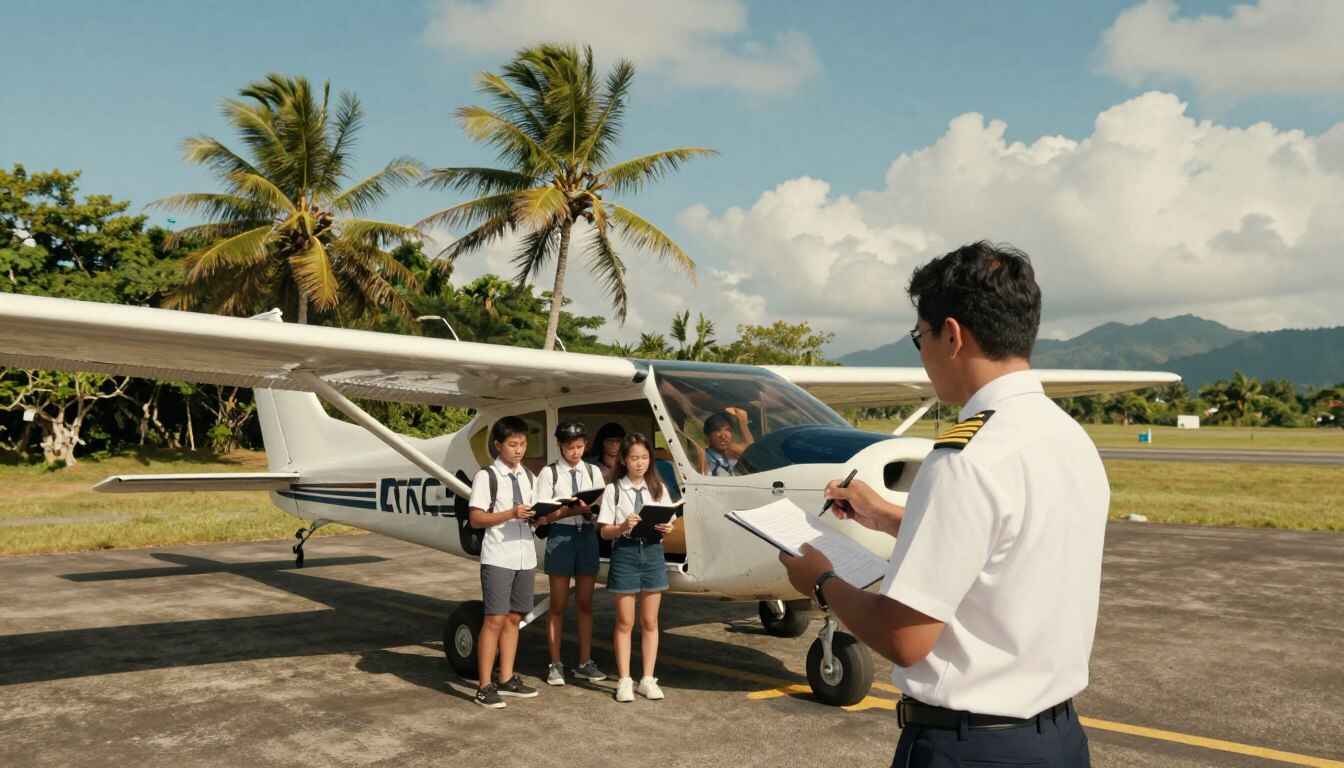
Being a commercial pilot is about more than just flying a plane. You’re responsible for the safety of everyone on board, from takeoff to landing.
Before each flight, you do careful safety checks to make sure everything is working properly. You also review weather updates and plan the best route for the journey. During the flight, you keep an eye on the instruments, adjust the course when needed, and stay in contact with air traffic control while keeping passengers informed.
If unexpected weather or situations come up, you need to think quickly and make the right decisions to keep everyone safe. After landing, you report any issues so the aircraft stays in good condition. It’s a job that requires focus, discipline, and constant attention every day.
Private Pilot vs. Commercial Pilot: Key Differences
A private pilot certificate lets you fly for personal use—like recreation, volunteering, or simply enjoying the experience of flying. It’s a rewarding way to explore the skies at your own pace.
But if your goal is to earn money as a pilot, you’ll need a commercial pilot certification. This is the professional level that allows you to be paid for flying and opens opportunities with airlines and charter companies.
| Feature | Private Level | Commercial Level |
|---|---|---|
| Primary Goal | Personal and recreational use | Professional career and income |
| Legal Payment | Cannot receive compensation | Authorized to receive payment |
| Complexity | Standard flight operations | Advanced navigation and safety |

The Regulatory Body: Civil Aviation Authority of the Philippines (CAAP)
The Civil Aviation Authority of the Philippines (CAAP) is the main governing body that oversees all flight operations in the country. It sets the safety rules that every flight school and airline must follow, so your pilot training stays aligned with international standards.
Because of these strict guidelines, your training in the Philippines meets global expectations. CAAP also helps make your pilot license recognized in other countries, which can open doors to opportunities with international airlines after the proper conversions.
CAAP also follows a structured system that guides pilots as they progress in their civil aviation journey—from student training to more advanced levels. Overall, CAAP helps ensure that pilots are trained safely, properly, and at a high standard.
Basic Requirements to Become a Pilot in the Philippines
Understanding the entry requirements is your first step toward earning your wings and launching a career in the clouds. You must meet specific standards to ensure you are ready for the challenges of flight training. These rules help the CAAP maintain safety across the local aviation industry.
Age and Educational Qualifications
Your path to becoming a pilot depends on your age and education.
To begin as a student, you need to be at least 17 years old to qualify for a private pilot license. If your goal is to work with an airline, you must be at least 18 years old.
A high school diploma is the minimum requirement for most flight schools. While not mandatory for training, many major airlines prefer candidates with a college degree. Having a degree can give you a better pilot career outlook over time.
Medical Certificate Requirements
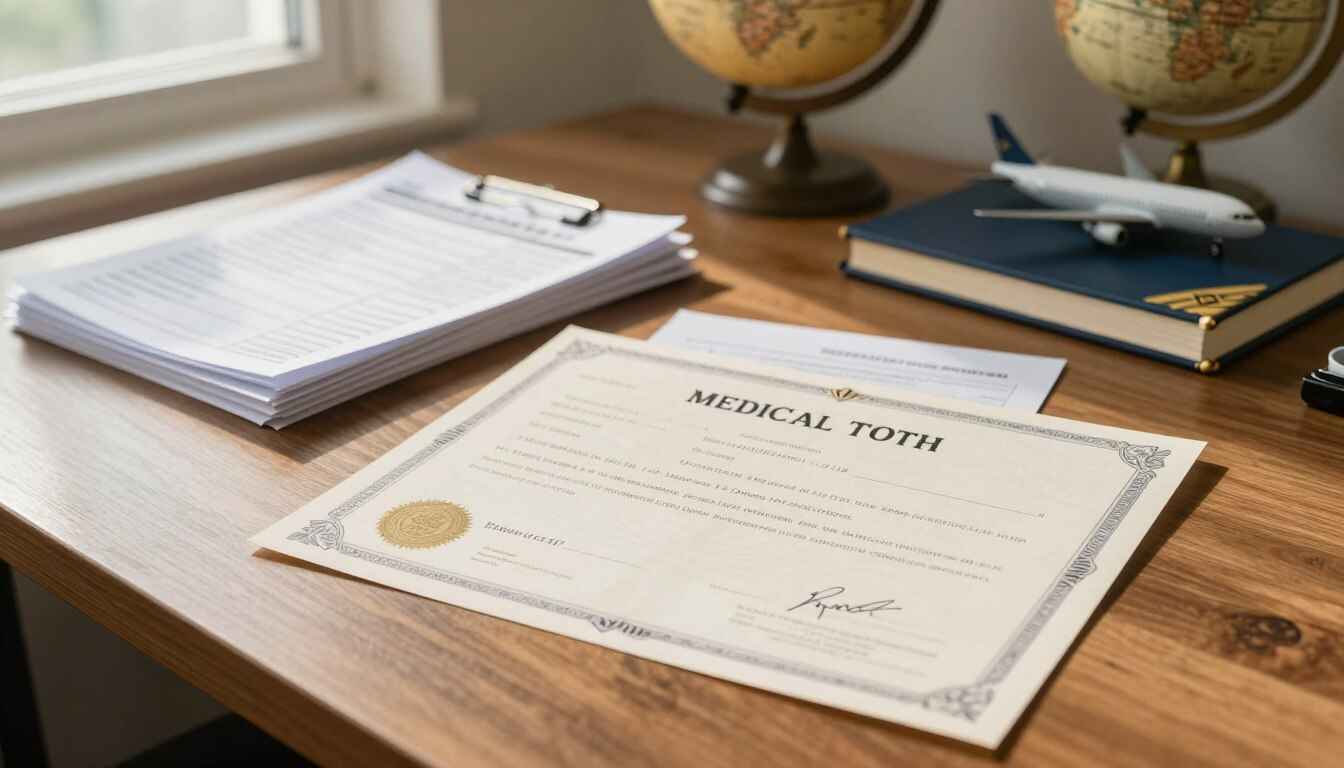
You must pass a physical exam from a CAAP-authorized doctor. This test checks your eyesight, hearing, and heart health. It also includes lung function, blood, and urine tests to ensure you can handle flight operations safely.
First Class vs. Second Class Medical Certificates
The type of medical certificate you need depends on your goals. Private flyers only need a 2nd Class medical certificate. However, any professional pilot must hold a valid 1st Class medical certificate to operate commercial planes.
English Language Proficiency Level 4
English is the standard language used in aviation around the world.
To become a commercial pilot, you’ll need at least Level 4 English proficiency so you can clearly communicate with air traffic control and understand cockpit manuals. This helps ensure safe and smooth communication during flights, especially in international routes and emergency situations.
Essential Documents You’ll Need
Before you start, gather your paperwork to avoid delays. You will need an NBI Clearance, a flight logbook, and an NTC License for radio use. Keep these strong documents organized for your application.
| License Type | Minimum Age | Medical Required | Education |
|---|---|---|---|
| Private (PPL) | At least 17 years | 2nd Class | High school Graduate |
| Commercial (CPL) | At least 18 years | 1st Class | High school Graduate |
| Airline (ATPL) | At least 21 years | 1st Class | Degree Preferred |
How to Become a Pilot in the Philippines: Complete Step-by-Step Guide
Becoming a pilot starts with a clear step-by-step path—from ground lessons all the way to the captain’s seat.
This training helps you build the technical skills and discipline needed for a career in aviation. Each stage is designed to prepare you properly, so you can fly safely, confidently, and professionally.
Step 1: Take an Introductory Flight
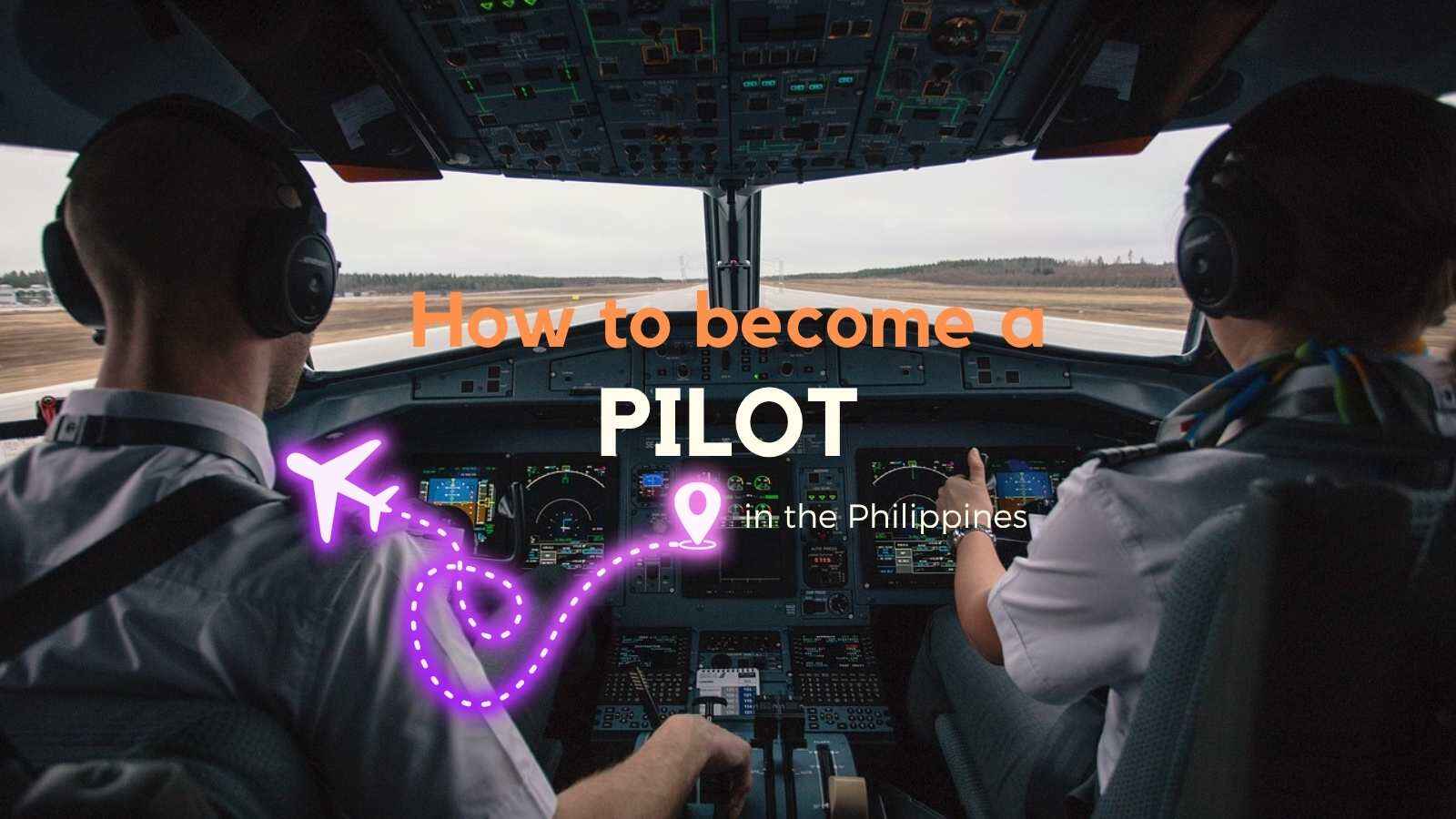
Starting your journey often begins with a discovery flight, where you get to experience what it feels like to actually control an aircraft.
It’s a simple first step that helps you see if flying is really for you before committing a lot of time and money. Think of it as a trial moment in the cockpit, just to understand if this path fits your goals and interest in aviation.
Step 2: Choose an Accredited Flight Training School
Look for schools that are CAAP-certified and have updated, modern facilities to support your pilot training. A reputable school provides the structure you need to master complex maneuvers and theoretical knowledge.
Check out the “Top 12 Best Flight Schools in the Philippines”
| Factor | Why it Matters | Quality Indicator |
|---|---|---|
| Certification | Ensures legal compliance | CAAP approved training |
| Aircraft Fleet | Offers hands-on experience | Modern pilot training tech |
| Environment | Impacts learning speed | Highly rated school reviews |
Step 3: Obtain Your Student Pilot License (SPL)
This is your first real step into becoming a pilot—it’s the license you need to start flying an airplane.
You’ll use it as you build up your flight time, usually around 40 to 50 hours, before moving on to your Private Pilot License (PPL). It’s valid for 24 months, and getting it is actually pretty straightforward.
You’ll also need a Pilot Medical Certificate, and most of the time, you’ll get both around the same stage of your training.
Step 4: Earn Your Private Pilot License (PPL)
To get a Private Pilot License (PPL), you’ll need to complete ground school and flight training, which usually takes about three to six months.
You must also finish at least 40 hours of flight time. This includes a mix of training with an instructor and your first solo flights across the Philippine archipelago. You must also pass a pilot knowledge test and a practical examination to move forward.
Once you meet all the requirements, you’ll be certified as a private pilot by the Civil Aviation Authority of the Philippines (CAAP).
Step 5: Build Flight Hours and Get Additional Ratings
After your PPL, you need to expand your capabilities by enrolling in an advanced course like Instrument Rating.
You can also take multi-engine flight training to prepare for bigger aircraft and more complex operations. This intermediate pilot training is where you develop the precision and ability to handle different flying conditions, including bad weather and low visibility.
Step 6: Obtain Your Commercial Pilot License (CPL)
To reach this professional level, you’ll need to complete around 220 hours of flight training to qualify for a commercial license.
This credential allows you to work for airlines or charter companies and get paid for your work. Becoming a commercial pilot is a major milestone that opens doors to various aviation job opportunities.
Step 7: Work Toward Your Airline Transport Pilot License (ATPL)
The last step in your aviation journey is the Airline Transport Pilot License (ATPL), which requires at least 1,500 total flight hours.
This is the highest level of pilot certification and qualifies you to become a captain on large commercial aircraft with a crew. Reaching this stage is a major achievement and marks the top level of a professional flying career.
Philippine Pilot Licenses: Requirements and Breakdown
Figuring out the different pilot licenses can seem like a lot at first, but it becomes much easier when you understand the path ahead.
Each license is a step forward in your aviation journey and gives you more flying privileges as your skills grow. CAAP oversees the process to make sure every pilot is properly trained and ready to fly safely.
You’ll move through different stages, starting with the basics and eventually working your way up to airline-level operations. Once you know how each level works, it’s easier to plan your training, budget, and timeline with confidence.
Student Pilot License (SPL)
SPL Requirements and Validity Period
The student pilot credential is your very first official document. It allows you to begin your actual flight training under the guidance of a certified instructor. You typically obtain this during your initial ground school phase together with your Pilot Medical Certificate.
Your SPL remains valid for 24 months, giving you plenty of time to build your skills. Most trainees use this period to accumulate the 40-50 hours flight time needed for the next level. The process is straightforward and focuses on your basic medical fitness and identity verification.
Private Pilot License (PPL)
Minimum Flight Hours: 40 Hours Required
The private pilot license is what most people imagine when they think of flying for fun. To earn this, you must complete a minimum of 40 hours of flight time. This total includes at least 20 hours of dual instruction, 10 hours of solo flight, and 10 hours of either dual or solo flight.
During these hours, you will learn how to navigate, communicate with towers, and handle emergencies. Solo flight is a major highlight, as you will command the aircraft entirely on your own for the first time. It is a rewarding experience that builds your confidence as a new flyer.
Complete PPL Requirements Checklist
To qualify for the private pilot license, you must be at least 17 years old. You need to be a high school graduate and hold a valid 2nd Class Medical Certificate. Documentation like an NBI Clearance and an NTC License, is also mandatory for your application.
You must pass the ATO Knowledge test and a Practical Flight Test with a CAAP examiner. Your logbook must accurately show every hour of flight you have completed during your training. Once you have these, you can officially carry passengers for non-commercial purposes. See the checklist below:
- Must be at least 17 years old
- At least a high school graduate
- NBI Clearance
- Flight Logbook (at least 40 hours)
- Passed the ATO Knowledge exam
- Passed the ATO Practical Flight Test and Oral Exam (Check ride)
- Valid 2nd Class Medical Certificate
- NTC License (Radio telephony)
Commercial Pilot License (CPL)
220 Hours Total Flight Time Requirement
If you want to earn a salary as a pilot, the commercial pilot license is your next target. This level requires a total of 220 hours of flight time to demonstrate your professional mastery. You must already hold a PPL before you can apply for this higher certification.
This pilot license proves you can handle more complex situations and larger aircraft safely. The additional hours focus on precision maneuvers and advanced navigation techniques. It is a demanding phase of your training that prepares you for the high standards of the aviation industry.
CPL Prerequisites and Documentation
For the commercial pilot license, you must upgrade to a 1st Class Medical Certificate. You also need to achieve English Language Proficiency Level 4 or higher. This ensures you can communicate clearly in international aviation settings during every flight.
The documentation involves more rigorous knowledge exams and practical tests compared to the PPL. Holding this license means you have the skills to work for charter companies or regional carriers. It is the bridge between being a hobbyist and a professional pilot.
- Must be at least 18 years old
- At least a high school graduate
- NBI Clearance
- Must hold a Private Pilot License (PPL)
- Flight Logbook (at least 220 hours)
- Passed the ATO Knowledge exam
- Passed the ATO Practical Flight Test and Oral Exam (Check ride)
- English Language Proficiency of at least level 4
- Valid 1st Class Medical Certificate
- NTC License (Radio telephony)
- Multi-Engine and Instrument Rating
Airline Transport Pilot License (ATPL)
1,500 Hours and Beyond: The Highest Level
The airline transport pilot license is the gold standard of aviation. To qualify for this prestigious pilot license, you need an impressive 1,500 hours of experience. This ensures you have the maturity and skill to manage heavy aircraft and large crews.
Reaching this time milestone often takes a few years of working as a flight instructor or cargo pilot. It is a long-term goal that requires dedication and a clean flying record. This transport pilot license is necessary if you aim to become a captain for major airlines.
Airline Transport Pilot Requirements for Airline Command
An airline transport pilot must pass advanced theoretical exams covering meteorology, navigation, and aircraft systems. You will also undergo a check ride in a multi-crew environment to test your leadership. The airline transport sector demands the highest level of safety and technical knowledge.
Achieving this transport pilot license opens the door to the most lucrative jobs in the industry. It certifies you as a transport pilot capable of leading a professional team in the cockpit. It is the final major step in your career course.
ATPL Checklist Requirements:
- Commercial Pilot License (CPL)
- Flight Logbook (at least 1,500 hours)
- NTC License (Radio telephony)
- ATO Certificate of ATPL Ground Training
- OFSAM Medical Certificate (1st Class)
- English Language Proficiency of at least level 4
Additional Ratings: Instrument Rating (IR) and Multi-Engine Rating (MER)
A rating is an add-on to your pilot license that allows you to perform specific tasks. An instrument rating (IR) is essential for flying in clouds or low visibility by using only the cockpit tools. Without an instrument qualification, your career options will stay very limited.
A multi-engine rating (MER) certifies you to fly planes with more than one engine, which is a requirement for most airlines. Each rating involves a specific pilot training course and a dedicated check ride. These certifications make you a much more versatile and employable professional pilot.
| License Type | Minimum Flight Hours | Key Requirement |
|---|---|---|
| Student (SPL) | 0 hours | Pilot Medical Certificate |
| Private (PPL) | 40 hours | 2nd Class Medical Certificate |
| Commercial (CPL) | 220 hours | 1st Class Medical Certificate |
| Airline Transport (ATPL) | 1,500 hours | Multi-crew Experience |
How Long Does It Take to Become a Pilot in the Philippines?
Most students take around 3 to 4 years to complete their aviation journey. You begin with basic flight training, earn your private pilot license, and then move into more advanced flight training courses until you qualify as a commercial pilot ready to apply for airline jobs. It takes time, but each stage brings you closer to flying professionally.
How much does pilot training cost in the Philippines?
Pilot training in the Philippines can cost anywhere from ₱3 million to ₱5 million or more, depending on the flight school, the type of training program, and how far you plan to go in your aviation career.
Here’s a simple breakdown of the usual costs:
- Private Pilot License (PPL): around ₱300,000 to ₱600,000
- Commercial Pilot License (CPL): around ₱2 million to ₱4 million
- Additional ratings and certifications (like Instrument Rating or Multi-Engine Training): extra ₱200,000 to ₱1 million+
The total amount often includes:
- Ground school
- Flight hours
- Instructor fees
- Simulator training
- Medical exams
- CAAP exams and licensing fees
Some flight schools offer package programs that combine everything into one training path, while others charge separately per flight hour. Costs can also change depending on fuel prices and aircraft availability.
How much is the average salary of a pilot?
Globally, pilot pay can look very different depending on where you are and how long you’ve been flying. On average, pilots earn about $55,000 to $200,000 a year. Entry-level pilots earn less, while experienced captains in major airlines can make $250,000 or more annually. Overall, it’s a well-paying career that increases significantly with experience and rank.
Airlines and Career Opportunities in the Philippines
Many airlines in the Philippines, like Philippine Airlines and Cebu Pacific, are actively hiring. You can build a career with these local airlines or look for international roles across Asia. These companies need individuals with an instrument rating to ensure safety during every flying mission.
Earning your multi-engine rating will further increase your chances of landing a job with a major airline. Training years pass quickly when you focus on your goal of flying for a living.
| Career Stage | Required Training | Primary Responsibility |
|---|---|---|
| Entry Level | CPL and Instrument Rating | General aviation or charter flights |
| First Officer | Type Rating and ATPL | Assisting the Captain on scheduled routes |
| Captain | High flight hours and more experience | Commanding the aircraft and crew |
Final thoughts:
A career in aviation may seem big and intimidating at first, but it’s absolutely possible with the right training, patience, and commitment. Following CAAP requirements and finding a good flight school can help set you on the right track.
Sometimes it starts with something as simple as trying a discovery flight and realizing the cockpit feels exactly where you’re meant to be. The process takes dedication, long study sessions, and plenty of flight hours, but many pilots once started in the exact same place.
Today, a lot of them are flying for airlines around the world. And like every pilot before them, it all began with that very first license.
Related article:
Interview with an Aeronautic Engineer